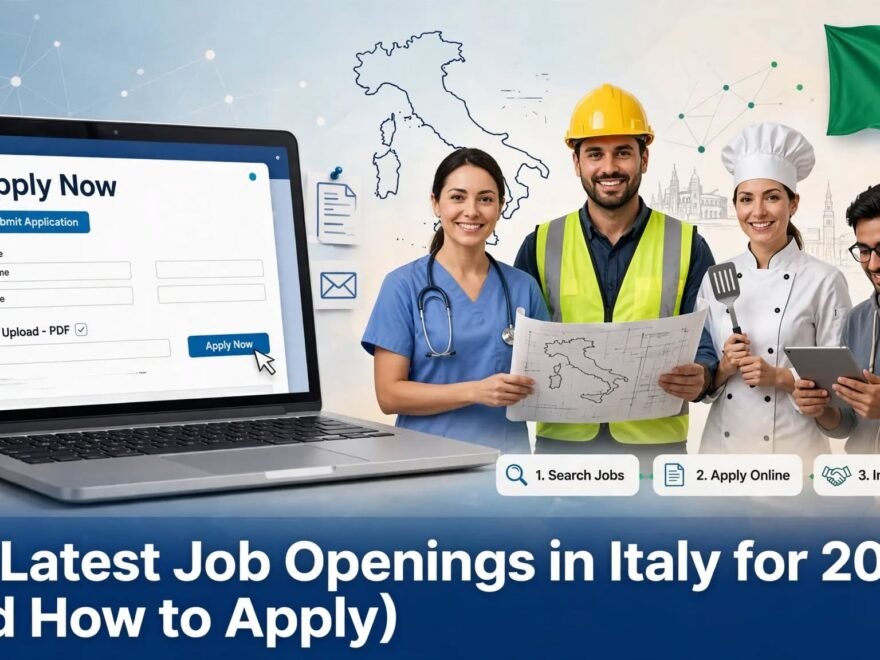
Italy, renowned across the globe for its rich cultural heritage, breathtaking landscapes, thriving culinary scene, and historic cities, is also experiencing a remarkable transformation in its labor market. For international professionals, skilled workers, and job seekers looking to build a career in Europe, Italy has emerged as a land of golden opportunities. Driven by demographic shifts, economic growth, and structural labor shortages, the Italian government has rolled out massive employment pathways for foreign nationals.
If you have ever dreamed of sipping espresso in Milan, working near the historic monuments of Rome, or contributing to industrial innovation in northern Italy, 2026 is your year to make it happen. This comprehensive guide explores the latest job openings in Italy, the mechanics of the official Decreto Flussi framework, high-demand employment sectors, and a step-by-step roadmap on how to secure your dream job and move legally.
1. Introduction: Why Italy is Hiring Foreign Workers in 2026
For decades, Italy faced complex economic challenges and strict immigration channels. However, a rapidly aging domestic population coupled with a declining birth rate has created profound labor vacuums across multiple core industries. To sustain its economy, maintain public services, and bolster industrial output, the Italian government has instituted progressive labor frameworks.
Read Also: Italy’s 2026 Hiring Boom: Top Openings in Tech, Healthcare, and Engineering
Under the multi-year Decreto Flussi (Flows Decree) policy framework spanning 2026 to 2028, hundreds of thousands of legal work permits are allocated for non-EU workers. This monumental shift opens official, secure, and ethical pathways for international talent to fill roles ranging from seasonal agriculture and hospitality to advanced engineering, healthcare, and corporate consulting.
2. Understanding the Decreto Flussi 2026 Quota Framework
Navigating employment in Italy requires a clear understanding of the Decreto Flussi. Unlike many countries that operate on a rolling employer-sponsored visa system alone, Italy regulates the bulk of its non-EU labor intake through state-mandated quotas released periodically via official decree windows.
What is the Decreto Flussi?
The Decreto Flussi is the legal decree enacted by the Italian Prime Minister’s office outlining the exact number of foreign workers permitted to enter Italy for seasonal and non-seasonal employment. The framework for the 2026–2028 cycle allocates hundreds of thousands of slots to counter labor shortages.
Key Quota Categories for 2026
The incoming work permits are categorized based on economic sector and skill level:
- Non-Seasonal Subsidized Employment: Geared towards steady industries like manufacturing, construction, transport, and logistics.
- Seasonal Employment: Tailored heavily for agriculture, harvesting, horticulture, and tourism/hospitality sectors (hotels, resorts, and restaurants).
- Specialized & Professional Categories: Reserved for healthcare assistants, caregivers, highly skilled corporate workers, entrepreneurs, and IT professionals who meet specific academic and professional criteria.
3. High-Demand Job Sectors in Italy for 2026
Employment opportunities vary widely depending on your background, language skills, and technical expertise. The Italian labor market features distinct regional demands:
A. Agriculture and Farming
Agricultural regions such as Puglia, Sicily, and Emilia-Romagna rely extensively on seasonal and permanent field workers.
- Core Roles: Fruit harvesting, vineyard maintenance, greenhouse management, dairy processing, and olive picking.
- Why it matters: It accounts for a substantial percentage of the entry-level quotas under the Decreto Flussi framework.
B. Hospitality and Tourism
As one of the world’s leading tourist destinations, Italy’s booming hotel chains, luxury resorts, restaurants, and coastal hubs face massive staffing needs, especially around Tuscany, Lake Como, Venice, and the Amalfi Coast.
- Core Roles: Culinary staff, line cooks, front desk coordinators, housekeeping supervisors, food and beverage attendants, and guest relations managers.
C. Logistics, Manufacturing, and Construction
Northern Italy serves as the industrial heartland of the country, anchored by economic powerhouses like Milan, Turin, Bologna, and Verona.
- Core Roles: Warehouse operators, supply chain specialists, industrial mechanics, CNC machine operators, and structural construction technicians.
D. Healthcare, Nursing, and Caregiving
With a rapidly aging demographic profile, Italy faces an acute shortage of professional caregivers, eldercare specialists, and medical support staff.
- Core Roles: Private care assistants (badanti), certified nursing assistants, and elderly care companions working through accredited health institutions.
E. Corporate, Technology, and Professional Services
For highly educated professionals fluent in English, major multinational firms, consulting powerhouses (such as PwC), and tech startups centered in Milan and Rome offer direct corporate sponsorship.
- Core Roles: Cloud advisory consultants, data analysts, software platform engineers, risk management associates, and international tax accountants.
4. Understanding Italian Employment Standards and Compensation
Working in Italy offers strong labor protection under national regulations. Knowing what to expect regarding contracts and benefits is essential for any international applicant.
- The CCNL Collective Contracts: Most legal jobs in Italy are governed by a Contratto Collettivo Nazionale di Lavoro (CCNL). These national labor contracts legally mandate minimum wages, working hours (typically 40 hours per week), paid overtime, and safety protocols.
- The 13th and 14th-Month Salary: A unique feature of Italian employment is the Tredicesima (and frequently Quattordicesima), meaning employees receive an extra month’s salary (or two) around Christmas and summer, boosting annual compensation by 8% to 17%.
- Paid Leave & Severance (TFR): Workers are legally entitled to roughly 26 days of paid annual leave, public holidays, and the Trattamento di Fine Rapporto (TFR)—a mandatory severance fund accumulated by the employer and paid out upon contract completion.
5. Step-by-Step Guide: How to Apply for Jobs in Italy
Securing a job in Italy from abroad requires precision, compliance with legal immigration channels, and careful timeline management. Follow this step-by-step guide to streamline your journey:
[1. Profile Optimization & Search] ➔ [2. Secure a Job Offer / Quota Match] ➔ [3. Employer Files Nulla Osta] ➔ [4. Type D Visa Application] ➔ [5. Arrival & Permesso di Soggiorno]
Step 1: Prepare Your Professional Profile
Tailor your curriculum vitae (CV) and cover letter to European standards (preferably in English or Italian). Emphasize hands-on experience, certifications, and adaptability. If you are applying for blue-collar or hospitality roles, list relevant past experience clearly; for corporate roles, highlight technical stacks or academic credentials.
Step 2: Apply via Verified Channels and Job Platforms
Utilize international job boards, specialized European recruitment agencies, and direct corporate career portals that support visa sponsorship.
- Look for employers explicitly participating in the Decreto Flussi intake windows.
- Avoid unverified third-party intermediaries charging illegal placement fees; ethical recruitment protocols safeguard your legal status.
Step 3: Secure the Employment Contract and “Nulla Osta”
Once an Italian employer extends a job offer, they must submit an application for a work authorization known as the Nulla Osta al Lavoro through the official Sportello Unico per l’Immigrazione (Single Immigration Desk) portal during designated “Click Days”.
- The employer handles this bureaucratic filing locally while demonstrating compliance with tax and financial requirements.
Step 4: Apply for the Type D Work Visa
Upon approval of the Nulla Osta, the document is transmitted electronically to the Italian embassy or consulate in your home country. You must then:
- Complete the National Type D Visa application form.
- Submit your valid passport, passport-sized photographs, employment contract, and approved Nulla Osta.
- Provide proof of suitable accommodation in Italy and comprehensive health insurance.
Step 5: Travel to Italy and Register
Upon entering Italy with your entry visa, you are legally required within 8 working days to visit the local Post Office (Poste Italiane) to submit your kit for the Permesso di Soggiorno (Residence Permit). Afterward, you will attend an appointment at the local police headquarters (Questura) for fingerprinting and final card issuance, sealing your official legal residency.
6. Essential Documents Checklist
To ensure your transition goes smoothly, gather and legalize the following foundational documents ahead of time:
- Valid Passport: Must have at least 6 months of validity beyond your intended stay and clean blank pages.
- Approved Nulla Osta: Issued by the Italian immigration desk via your employer.
- Employment Contract: Signed copy outlining your CCNL classification, salary, and duties.
- Proof of Accommodation: Lease agreement, hotel booking, or hospitality declaration (dichiarazione di ospitalità).
- Police Clearance Certificate: Background check from your home country verifying no criminal record.
- Educational & Professional Certificates: Translated and legalized diplomas or trade certifications where applicable.
7. Conclusion
The opening of hundreds of thousands of work slots under Italy’s framework makes 2026 an unprecedented window of opportunity for global professionals aiming to build a European career. Whether your ambition lies in harvesting the rich agricultural lands of the south, managing luxury hospitality on the coast, or driving software innovation in Milan, success belongs to those who prepare meticulously, respect legal immigration guidelines, and target genuine employers. Take the first step today by refining your resume, tracking quota timelines, and opening doors to your Italian future.
8. Frequently Asked Questions (FAQs)
Q1: Can I move to Italy and look for a job without an employer sponsoring me?
A: Non-EU citizens generally cannot move long-term without prior sponsorship or an approved visa category. Most standard employment paths require an Italian employer to initiate the Nulla Osta work permit process through the Decreto Flussi quota.
Q2: What language proficiency is required to work in Italy?
A: Language requirements depend entirely on the sector. Seasonal farming, warehousing, and certain manufacturing roles may have minimal Italian language prerequisites. However, corporate, tech, consulting, and customer-facing tourism roles require strong professional English, while basic conversational Italian is always an asset for daily integration.
Q3: How long does the Italian work visa process take?
A: Once an employer files the Nulla Osta during open quota windows, statutory processing times typically take around 60 days. Following approval, obtaining the Type D visa from your local Italian consulate generally takes a few additional weeks.
Q4: Can seasonal work permits be converted into long-term residency?
A: Yes. Under specific legislative provisions, workers who enter on seasonal visas can often convert their status into non-seasonal, standard employment residence permits if their employer offers a permanent contract extension and regional quota conversions are available.
One comment