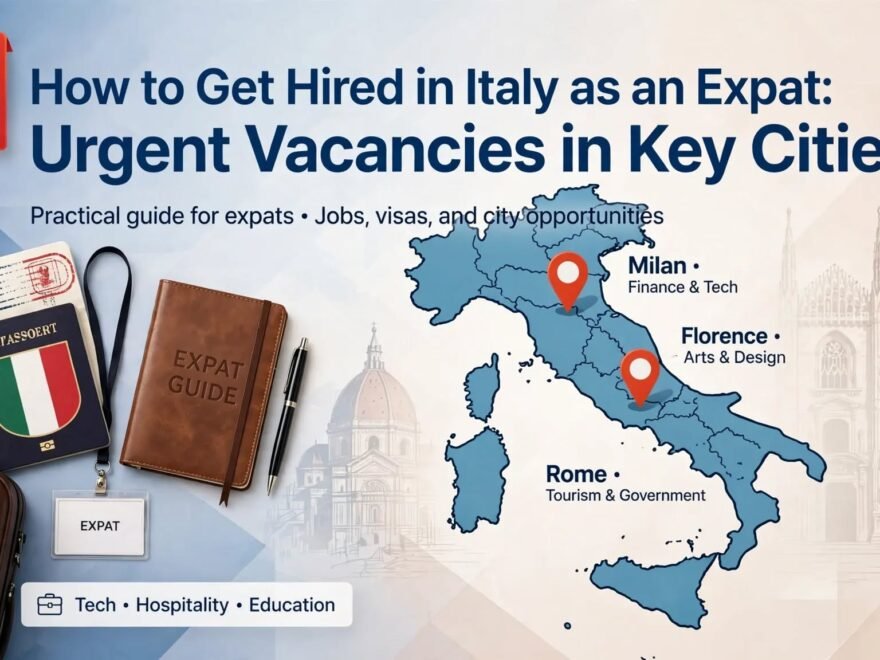
Imagine waking up to the gentle hum of historic streets, sipping an authentic espresso at a sun-drenched piazza, and building a rewarding career in the heart of Southern Europe. Moving to Italy is a dream shared by millions, but transforming that fantasy into reality requires navigating the local job market with precision, strategy, and insider knowledge.
Whether you are an ambitious tech professional, a seasoned finance expert, or a creative looking for international exposure, the Italian job market holds exciting opportunities. This comprehensive guide explores how you can successfully land a job in Italy as an expat, discover urgent job vacancies across major economic hubs, and master the work visa process.
1. Understanding the Italian Expat Job Market
Italy’s economic landscape is diverse, defined by a powerful industrial north and a vibrant tourism-driven center and south. For expats, the job market can initially seem intimidating due to bureaucratic hurdles and language requirements. However, multinational corporations, tech startups, and global institutions are increasingly breaking down these barriers.
Key Sectors Hiring English-Speaking Expats
While fluency in Italian is a massive asset, several industries readily hire international talent who only speak English:
- Information Technology & Engineering: Software development, cloud architecture, artificial intelligence, and digital transformation.
- Finance & Consulting: Multinational banks, accounting firms, and global management consultancies located primarily in Milan.
- Tourism, Luxury, & Hospitality: High-end hospitality chains, fashion houses, and international event management agencies.
- Education & Language Services: English teaching, corporate language training, and international schooling.
Read Also: Italy Visa Sponsorship Jobs: In-Demand Roles Actively Recruiting Overseas
2. Top Key Cities with Urgent Vacancies for Expats
If you want to maximize your chances of getting hired quickly, you need to target the urban powerhouses where international companies cluster.
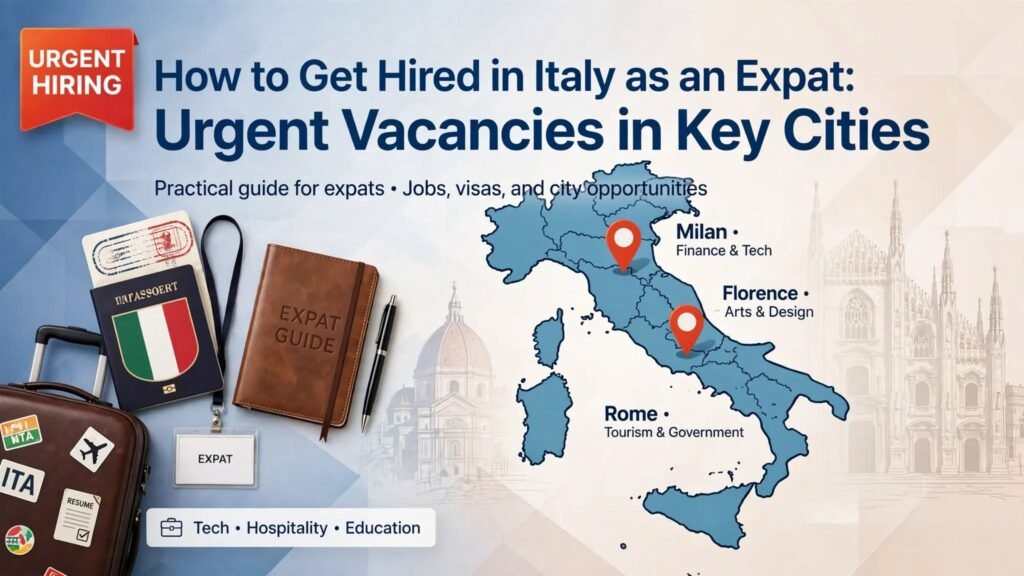
Milan: The Financial and Corporate Capital
Milan is the economic engine of Italy and the easiest city for expats to land corporate employment.
- Industries: Finance, Fashion, Tech, Design, and Corporate Law.
- Current Hiring Trends: There is a surge in urgent vacancies for data analysts, digital marketers, international accountants, and multilingual customer success managers. Major companies and global consultancies frequently offer relocation packages and visa sponsorship for specialized mid-to-senior roles.
Rome: Diplomacy, Tourism, and International Organizations
Rome offers a unique blend of ancient history and modern bureaucratic governance.
- Industries: International Organizations (FAO, WFP), Public Relations, Tourism, and Higher Education.
- Current Hiring Trends: Urgent needs arise heavily within hospitality management, international project coordination, English-language communications, and specialized consulting tied to diplomatic bodies.
Bologna & Turin: Engineering and Manufacturing Hubs
Often overlooked by casual job seekers, Northern hubs like Turin (the automotive capital) and Bologna (packaging and mechanical engineering) are hotspots for technical talent.
- Industries: Automotive, Advanced Manufacturing, Robotics, and R&D.
- Current Hiring Trends: Mechanical engineers, supply chain managers, and logistics coordinators are in constant high demand.
3. Navigating Italian Work Visas and Sponsorship
To legally work in Italy as a non-EU expat, you must secure the correct visa and work authorization. Understanding how sponsorship works is critical to your job search strategy.
The Standard Work Visa (Decreto Flussi)
Italy regulates non-EU migration through an annual quota system known as the Decreto Flussi. Under this system:
- An Italian employer must request a work clearance (Nulla Osta) from the local immigration office.
- Once approved, you apply for an entry work visa at the Italian consulate in your home country.
- Upon arrival in Italy, you must convert your visa into a Residence Permit (Permesso di Soggiorno) within 8 days.
The EU Blue Card (Quota-Exempt)
If you are a highly skilled professional with a university degree or specialized professional qualifications, you may qualify for the EU Blue Card.
- Benefits: It is exempt from the yearly Decreto Flussi quotas, offers faster processing windows, and provides smoother paths toward long-term European residency and family reunification.
4. Step-by-Step Strategy to Land a Job in Italy
Securing employment from abroad requires a proactive, highly structured approach. Follow these steps to stand out to hiring managers:
- Tailor Your CV to European Standards: Create a clean, professional CV (often formatted similarly to a Europass or concise two-page corporate resume). Highlight international achievements, cross-cultural project management, and language proficiencies.
- Leverage Specialized Job Boards: Look beyond generic sites. Utilize platforms tailored for international talent such as LinkedIn, Expat.com, Glassdoor, and niche local portals focused on English-speaking roles in Milan and Rome.
- Network Relentlessly: Many corporate vacancies in Italy are filled through internal referrals rather than public job boards. Connect with HR managers, recruiters, and expat community leaders on LinkedIn before applying.
- Target Companies with International Workforces: Focus your search on multinational corporations or tech scale-ups that regularly sponsor work visas and operate internal business in English.
5. Conclusion & Frequently Asked Questions (FAQs)
Landing a job in Italy as an expat takes patience, resilience, and a clear understanding of administrative requirements. By targeting major economic hubs like Milan and Rome, focusing on high-demand sectors, and mastering the visa sponsorship landscape, you can turn your Italian dream into a thriving reality.
Frequently Asked Questions
- Can I find a job in Italy without speaking Italian? Yes, especially in major cities like Milan and Rome, multinational corporations, tech firms, and international organizations hire English-speaking professionals. However, learning basic Italian will significantly boost your integration and career growth.
- How long does the Italian work visa process take? Timelines vary based on the visa category. Standard employer-sponsored visas through the Decreto Flussi can take anywhere from 3 to 6 months, while EU Blue Card applications for highly skilled workers are often processed more rapidly.
- Which city is best for English-speaking expats in Italy? Milan is widely considered the best city for career opportunities due to its dense concentration of multinational companies, financial institutions, and startup ecosystems.
One comment