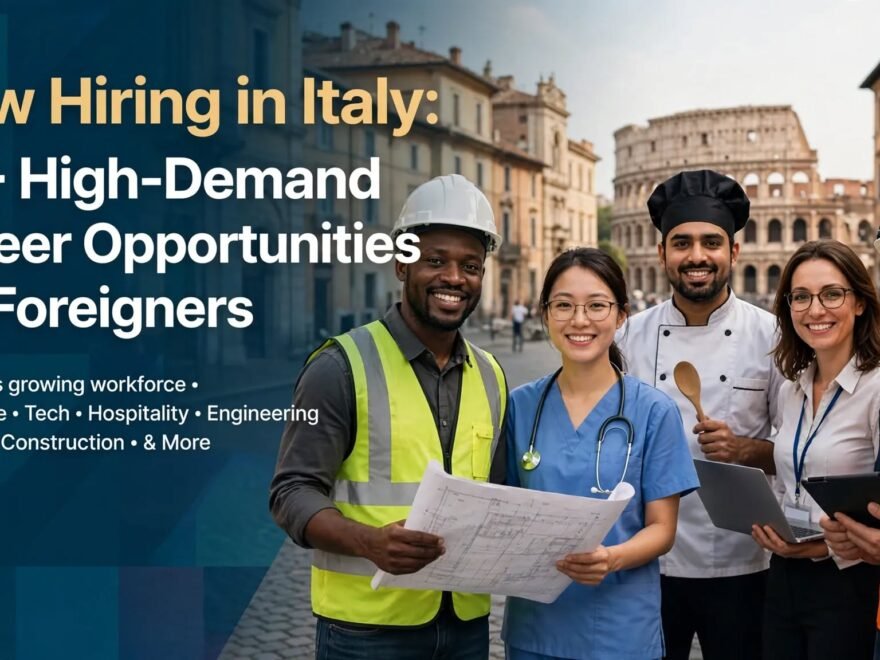
Italy—famous for its world-class art, timeless history, rich culinary traditions, and stunning landscapes—is undergoing a major economic transformation. Driven by industrial growth, a rapidly aging native demographic, and investments from national recovery programs, Italy is facing a severe labor shortage across multiple vital sectors.
For international professionals, skilled tradespeople, and global graduates, this shift has opened up extraordinary pathways to live, work, and build a stable career in Southern Europe. If you have ever dreamed of trading your routine for an Italian lifestyle, there has never been a more opportune moment. This comprehensive guide details over 20 high-demand career opportunities in Italy for foreigners, along with actionable insights on visas, top industries, and application strategies.
Understanding Italy’s Modern Labor Market
Italy’s job market relies heavily on a blend of robust traditional manufacturing, small-to-medium enterprises (SMEs), and expanding digital technology networks. Recent labor statistics from national employment surveys indicate hundreds of thousands of unfilled vacancies because local talent pools cannot keep up with industry demands.
Employers across sectors like engineering, information technology, healthcare, and tourism are actively looking beyond national borders to hire international candidates. Whether you are a tech expert looking to relocate to Milan or a skilled artisan ready to contribute to Italy’s precision manufacturing backbone, understanding where the demand lies is your first step toward success.
Read Also: Italy’s 2026 Hiring Boom: Top Openings in Tech, Healthcare, and Engineering
Top 20+ High-Demand Career Opportunities for Foreigners in Italy
The Italian job market spans diverse industries, categorized below into high-impact sectors.
1. Information Technology & Digital Innovation
As Italy accelerates its digital infrastructure through modern national initiatives, the tech sector is booming—particularly in tech hubs like Milan, Rome, and Turin. English is widely accepted in multinational tech firms and start-ups.
- Software Developers & Full-Stack Engineers: High demand for modern frameworks, cloud computing, and application architecture.
- Cybersecurity Specialists: Protecting critical enterprise and public administration infrastructure from evolving digital threats.
- Data Analysts & Scientists: Helping traditional Italian businesses transition into data-driven decision-making models.
- UX/UI Designers: Creating intuitive digital experiences for e-commerce, fintech, and public portals.
2. Engineering & Advanced Manufacturing
Italy is Europe’s second-largest industrial power, renowned for mechanical production, automotive engineering, and robotics.
- Mechanical & Automation Engineers: Designing machinery, production lines, and automated industrial equipment.
- CNC Machine Operators & Technicians: Highly sought-after blue-collar technical roles requiring precision craftsmanship.
- Electrical & Electronics Engineers: Powering smart grids, energy-efficient manufacturing, and electronic systems.
- Energy & Renewable Transition Engineers: Driving solar, wind, and thermal sustainability projects funded by European green initiatives.
3. Healthcare & Social Care Services
With one of the oldest populations in the world, Italy’s healthcare system experiences structural gaps that create steady, long-term employment for medical professionals.
- Registered Nurses: In high demand across public and private clinics (foreign qualifications require official validation through the Ministry of Health).
- Medical Specialists & Doctors: Selected specialized medical practitioners find fast-tracked immigration and credential recognition pathways.
- Elderly Care Assistants (Badanti & Caregivers): Essential residential and community care roles supporting aging households.
- Physiotherapists & Rehabilitation Specialists: Supporting recovery, mobility, and elder wellness programs.
4. Tourism, Hospitality, and Culinary Arts
Tourism drives a massive portion of Italy’s GDP, welcoming tens of millions of international visitors annually. Bilingual and multilingual candidates thrive here.
- Chefs, Cooks & Pizzaiolos: Culinary professionals skilled in authentic Mediterranean cuisine or international styles.
- Hotel Management & Front Desk Receptionists: Multilingual customer service professionals for high-end resorts and city hotels.
- Tour Guides & Cultural Coordinators: Offering specialized historical, artistic, and adventure tours for global travelers.
5. Construction, Infrastructure, and Skilled Trades
Ongoing infrastructure upgrades, urban renewals, and housing renovations mean skilled trade professionals are heavily recruited.
- Electricians & Plumbers: Certified professionals for commercial and residential construction projects.
- Welders & Metal Fabricators: Crucial for heavy industry, shipyards, and structural engineering.
- Carpenters & Tilers: Traditional and modern construction specialists.
6. Logistics, Transport, and Supply Chain
Global trade flows and the rise of e-commerce have expanded Italy’s supply chain network significantly.
- Heavy Goods Vehicle (HGV) Drivers: Transporting goods across national and international European corridors.
- Warehouse Supervisors & Supply Chain Coordinators: Managing inventory automation and dispatch centers.
Legal Pathways: How Foreigners Can Work in Italy
Securing a job is only half the battle; navigating Italian immigration law is equally important. Non-EU citizens typically require legal authorization to live and work in the country.
| Visa / Route | Target Audience | Key Advantage |
| EU Blue Card | Highly skilled professionals with university degrees and job offers | Quota-free, fast-tracked processing timelines (approx. 30–90 days) |
| Decreto Flussi (Work Quota) | Seasonal and non-seasonal workers across agriculture, tourism, construction, and mechanics | Direct sponsorship channel managed through annual government decrees |
| Article 27 Special Categories | Intra-company transferees, university professors, specialized nurses, and remote workers | Exempt from standard quotas and click-day limits |
| EU Citizens / EEA | Citizens originating from EU member states | Can move, reside, and work locally without a work permit |
Step-by-Step Guide to Landing a Job in Italy
- Optimize Your Resume (CV): Tailor your resume to European standards (Europass format is widely respected). Highlight measurable achievements, technical skills, and language competencies.
- Target the Right Job Portals: Utilize official platforms like inPA (for public sector roles), Euraxess (for academic and research positions), and general professional networks like LinkedIn and Indeed Italy.
- Learn the Language: While tech and multinational firms operate in English, basic conversational Italian (A2/B1 level) vastly increases your employability and everyday integration.
- Secure Credential Recognition: If entering a regulated profession (such as healthcare, engineering, or teaching), initiate the formal declaration of value (dichiarazione di valore) or professional recognition early.
- Connect with Employers Directly: Research major Italian corporations (such as Enel, Eni, Ferrari, or international firms with Italian branches) that regularly sponsor non-EU talent.
Conclusion
Moving to Italy to advance your career offers a rare blend of professional growth and an unmatched Mediterranean quality of life. Whether your expertise lies in software engineering, healthcare, advanced manufacturing, or hospitality, Italy’s ongoing labor shortages mean skilled foreign workers are more welcome than ever. By preparing your credentials, understanding visa pathways like the EU Blue Card or Decreto Flussi, and targeting high-demand industries, you can turn your European relocation dream into a thriving reality.
Frequently Asked Questions (FAQs)
- Q: Can I find a job in Italy if I only speak English?A: Yes, particularly in multinational corporations, tech start-ups in Milan, research institutions, and international tourism. However, learning Italian significantly expands your career opportunities and daily convenience.
- Q: What is the average salary in Italy for skilled workers?A: Gross full-time salaries average around €34,000+ per year, with specialized sectors like IT, finance, and senior engineering commanding higher compensation packages.
- Q: Do I need a job offer before applying for an Italian work visa?A: In most cases, yes. Non-EU applicants generally require a binding job offer so that their prospective employer can apply for a work authorization (Nulla Osta) through local immigration offices.
One comment