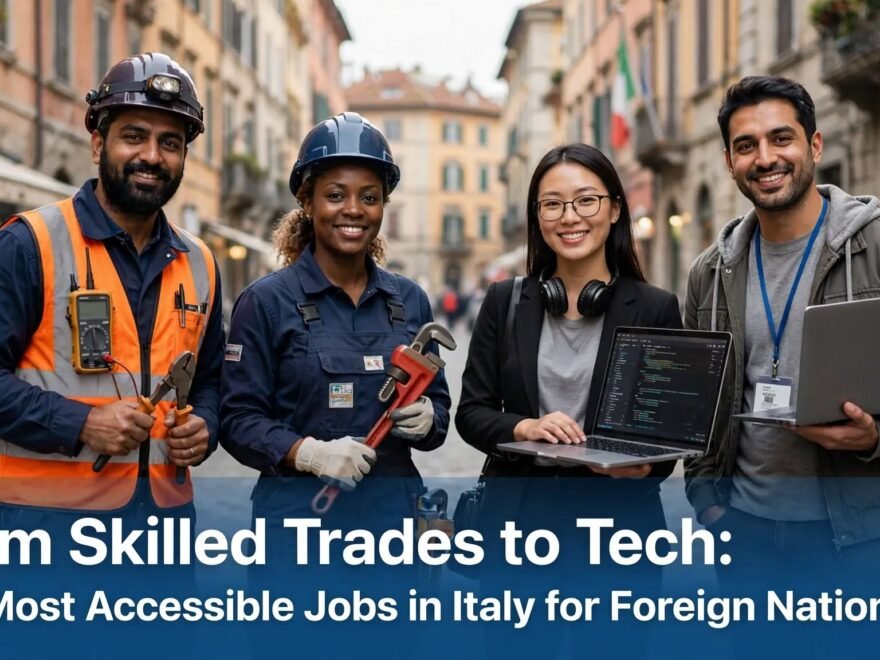
Italy, renowned worldwide for its rich historical heritage, art, fashion, and culinary excellence, is also the third-largest economy in the Eurozone. Beneath its picturesque landscapes and thriving tourism sectors lies a dynamic, industrialized labor market facing a profound demographic shift. An aging population and a widening skills gap have created massive labor shortages across multiple sectors, ranging from traditional hands-on craftsmanship and construction to cutting-edge technology and digital engineering.
For foreign nationals seeking international career growth, Europe’s Mediterranean hub presents a world of opportunity. While the myth persists that working in Italy requires complete fluency in Italian, the reality of the modern Italian job market is far more nuanced. International tech hubs in Milan and Bologna, manufacturing powerhouses in the north, and structural infrastructure projects across the country are opening doors wide for non-EU professionals.
Whether you are a certified trade professional looking to apply your manual mastery or a technology specialist seeking a digital career in Europe, this comprehensive guide explores the most accessible jobs in Italy for foreign nationals, the legal entry pathways, and actionable strategies for success.
The Evolving Italian Job Market: Why Foreign Nationals Are in Demand
Italy’s economic framework relies heavily on small and medium-sized enterprises (known locally as PMI), advanced manufacturing, specialized engineering, and a rapidly digitizing corporate landscape. However, the nation faces a severe shortage of working-age professionals. Recent data highlights hundreds of thousands of unfilled vacancies spanning manufacturing, green technology, healthcare, construction, and information technology.
Read Also: How to Get Hired in Italy as an Expat: Urgent Vacancies in Key Cities
To combat these shortages, the Italian government has expanded legal immigration pathways. Through multi-year frameworks like the Decreto Flussi (Flows Decree), hundreds of thousands of work permits are systematically allocated to non-EU foreign nationals. This structural shift means that skilled workers, technicians, and technology experts from around the globe find it increasingly viable to secure legal employment, obtain work sponsorships (Nulla Osta), and build long-term stability in Europe.
Category 1: Skilled Trades and Hands-On Professions
If you possess a specialized vocational background, your skills are likely in very high demand across Italy. Unlike corporate office roles that often demand high-level proficiency in the local language, skilled trades value tangible craftsmanship, technical troubleshooting, and practical execution.
+-------------------------------------------------------------+
|              TOP SKILLED TRADES IN ITALY                    |
+-------------------------------------------------------------+
|  • Precision Carpentry & Woodworking                        |
|  • Advanced Welding & Metal Fabrication                     |
|  • Automotive & Motorsport Engineering Mechanics            |
|  • HVAC, Electrical & Industrial Installation Techs         |
+-------------------------------------------------------------+
1. Advanced Welding and Metal Fabrication
Italy’s robust manufacturing sector—spanning heavy machinery, shipbuilding, and industrial infrastructure—relies heavily on certified welders and metal fabricators. Workshops and industrial plants in northern industrial corridors constantly look for internationally certified professionals who can interpret blueprints and execute precision welding under European safety standards.
2. Precision Carpentry and Specialized Woodworking
Rooted in centuries of architectural restoration and bespoke design, Italy maintains a massive market for master carpenters and woodworkers. Whether restoring historic villas in Tuscany or constructing high-end commercial interiors in Milan, skilled artisans who understand timber engineering, cabinetry, and structural framing find steady, lucrative contracts.
3. Automotive Mechanics and Motorsport Technicians
Home to iconic automotive giants like Ferrari, Lamborghini, Maserati, and Ducati, Italy is a global epicenter for automotive engineering. While top-tier R&D engineering roles require advanced degrees, assembly lines, specialized tuning garages, and mechanical maintenance hubs frequently recruit hands-on mechanical technicians with proven diagnostic experience.
Key Advantages of Skilled Trades in Italy:
- Lower Language Barriers: Practical execution often transcends linguistic roadblocks during initial project phases.
- Vocational Recognition: International trade certifications (when properly evaluated or apostilled) provide a direct gateway to employment contracts.
- Strong Union and Legal Protections: Italian labor laws (Contratto Collettivo Nazionale di Lavoro or CCNL) guarantee standard working hours, paid holidays, and mandatory safety provisions.
Category 2: Information Technology and Digital Careers
For foreign nationals with a background in software development, data, or cybersecurity, Italy’s tech ecosystem has undergone a massive evolution. Cities like Milan, Rome, and Turin have transformed into vibrant tech hubs hosting international corporations, fast-growing startups, and global consultancy offices where English is the primary working language.
+-------------------------------------------------------------+
|                 HIGH-DEMAND TECH ROLES                      |
+-------------------------------------------------------------+
|  • Software Engineers & Full-Stack Developers               |
|  • Data Engineers & Cloud Architects                        |
|  • Digital Marketing & Growth Specialists                   |
|  • Enterprise IT Support & Systems Analysts                 |
+-------------------------------------------------------------+
1. Software Engineers and Full-Stack Developers
Multinational firms and tech scale-ups in Milan constantly recruit software talent globally. Proficiency in modern programming stacks (Python, JavaScript, React, cloud infrastructure) matters far more than local language skills in these innovation-driven environments. Code is universal, and international development teams routinely operate entirely in English.
2. Data Engineers and Cloud Specialists
With enterprises across finance, fashion, and manufacturing migrating to cloud architecture, data management professionals are scarce and highly sought after. Roles involving pipeline design (BigQuery, dbt, Airflow), database governance, and business intelligence command competitive salaries well above the national median.
3. Digital Marketing and International E-Commerce Specialists
Italy’s luxury goods, fashion houses, and manufacturing brands rely heavily on global reach. Digital marketers, SEO strategists, and international e-commerce managers who understand cross-border digital campaigns, performance marketing, and global consumer psychology find ample opportunities in metropolitan business centers.
Category 3: Emerging Accessibility Options for Foreign Professionals
Navigating the Italian job market requires understanding the structural gateways established by Italian immigration policy and European directives.
The Decreto Flussi (Flows Decree) System
The primary mechanism for non-EU nationals to enter the Italian labor market is the Decreto Flussi. This annual or multi-year decree outlines exact quotas for non-EU workers across specific categories, including seasonal work, subordinate non-seasonal employment, and specialized trades. Under recent frameworks, bilateral agreements with select countries prioritize quotas for vocational and technical workers, creating structured pathways from application to visa issuance.
The EU Blue Card Route
For highly skilled professionals—particularly IT experts, engineers, and senior technicians meeting specific salary thresholds—the EU Blue Card offers a streamlined alternative. It bypasses many traditional quota restrictions, allowing high-earning foreign specialists to live and work in Italy with accelerated paths to permanent residency.
Step-by-Step Roadmap: How to Land a Job in Italy from Abroad
Securing employment in Italy as a foreign national requires a methodical, step-by-step approach.
<Sequence>
  <Step title="Step 1: Skill Alignment and Credential Recognition" subtitle="Translate and validate your qualifications">
    Ensure your professional certificates or university degrees are properly translated and, where necessary, verified or apostilled for European equivalence. Build a clean, ATS-compliant CV formatted to European standards (Europass or modern clean template).
  </Step>
  <Step title="Step 2: Target the Right Hubs and Job Portals" subtitle="Focus on English-friendly sectors and cities">
    Utilize specialized platforms and global job boards. Target major corporate hubs like Milan for finance and tech, Bologna for engineering and manufacturing, or Rome for international organizations. Leverage platforms catering to English-speaking professionals in Italy.
  </Step>
  <Step title="Step 3: Secure an Employment Contract and Nulla Osta" subtitle="The legal sponsorship phase">
    Once an Italian employer extends a formal job offer, they apply for your work authorization (*Nulla Osta*) through the local immigration office (*Sportello Unico per l'Immigrazione*).
  </Step>
  <Step title="Step 4: Visa Issuance and Relocation" subtitle="Consular processing and arrival">
    With the *Nulla Osta* granted, apply for your long-stay national work visa (D-Visa) at the Italian Embassy or Consulate in your home country. Upon arrival in Italy, you have 8 days to apply for your physical residence card (*Permesso di Soggiorno*).
  </Step>
</Sequence>
Salary Expectations and Cost of Living
Understanding financial realities ensures a smooth transition when moving to Italy. Salaries vary depending on experience, sector, and geographical location (northern cities like Milan typically offer higher salaries balanced against a higher cost of living compared to southern regions).
| Experience Level | Average Gross Salary (Skilled Trades / Tech) | Approximate Economic Lifestyle |
| Entry-Level (0–2 years) | €20,000 – €30,000 per year | Comfortable shared housing or compact studio living in major urban centers. |
| Mid-Level (3–5 years) | €30,000 – €48,000 per year | Independent apartment rental, standard European lifestyle, savings potential. |
| Senior-Level (5+ years) | €48,000 – €90,000+ per year | Highly comfortable living, family support, excellent travel and leisure opportunities. |
Overcoming Challenges: Language and Cultural Integration
While technical proficiency and trade skills open doors, long-term success and integration in Italy rely heavily on cultural adaptability.
- Learn Basic Italian: Even if your daily workplace operates entirely in English, learning conversational Italian (at least up to an A2/B1 level) is essential for daily administration, grocery shopping, healthcare interactions, and building rapport with local neighbors.
- Understand Bureaucracy: Italian administrative processes (such as obtaining your Codice Fiscale tax code or registering residency) require patience and persistence. Approach local offices (Comune and Questura) with complete documentation and calm professionalism.
- Network Locally: Professional associations, local meetup groups, and chambers of commerce in Milan and Rome offer invaluable networking channels that often lead to unadvertised job opportunities.
Conclusion
Transitioning your career to Italy from abroad is an achievable ambition if approached with strategy, preparation, and realistic expectations. Whether you are working with tools in advanced manufacturing and precision trades or writing code in a modern Milanese tech office, Italy’s open doors for foreign talent offer a remarkable lifestyle change coupled with professional fulfillment. By aligning your skill set with market demands, navigating legal pathways like the Decreto Flussi, and committing to cultural integration, you can build a thriving, secure future in the heart of the Mediterranean.
Frequently Asked Questions (FAQs)
1. Do I need to speak fluent Italian to find a job in Italy?
Not necessarily. While proficiency in Italian is mandatory for client-facing or localized administrative roles, numerous technical positions in IT, software engineering, digital marketing, and specialized manufacturing operate entirely in English, particularly in metropolitan hubs like Milan and Bologna.
2. How long does the Italy work visa process take?
Once an employer secures the work authorization (Nulla Osta) through the local immigration office, the timeline depends on consular appointment availability in your home country. Typically, the entire process—from initial job offer to visa issuance—takes anywhere from 3 to 6 months.
3. Can I bring my family members with me to Italy?
Yes. Under Italy’s family reunification laws, foreign nationals holding a valid work residence permit of at least one year can apply to bring their spouse and dependent children. Once unified, family members are legally permitted to work or study in Italy.
4. What happens if I lose my job while working in Italy on a work visa?
If you lose your job, your residence permit does not instantly become void. You can register as unemployed with the local employment office (Centro per l’Impiego) and legally remain in Italy to search for a new job for up to one year, during which time you can transfer your sponsorship to a new employer.
One comment